
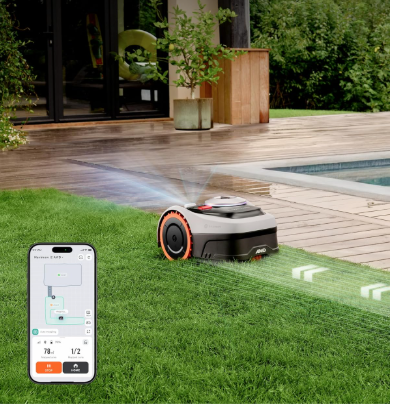
Choosing the Best Robot Lawn Mowers 2026 can make lawn maintenance easier, more convenient, and less time consuming. I find that modern robotic lawn mowers offer impressive features, including wire free installation, AI powered obstacle detection, precise navigation, automatic recharging, smart app controls, and the ability to handle slopes and uneven terrain.
These improvements make them an excellent option for homeowners who want a consistently neat lawn without spending hours mowing manually. In this guide, I will review some of the best robot lawn mowers available to consider, highlighting their key features, advantages, and limitations. I will also cover the essential factors to consider when buying one, including lawn size, battery capacity, cutting performance, navigation technology, terrain capability, and security features. Finally, I will answer frequently asked questions to help you compare your options and choose the right robot lawn mower for your garden in 2026.
Best Robot Lawn Mowers 2026
1) TerraMow V1000 Robotic Lawn Mower
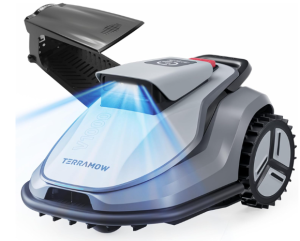
The TerraMow V1000 Robotic Lawn Mower is designed for homeowners who want a well maintained lawn without spending hours pushing a traditional mower. It combines wire free navigation, triple camera AI vision, intelligent obstacle avoidance, and customizable mowing schedules to automate routine lawn care. With no boundary wire or RTK system required, the V1000 aims to simplify installation while delivering consistent coverage across different areas of the yard.
Its ability to manage multiple mowing zones, navigate narrow paths, handle slopes, and return to its charging station makes it a compelling option for homeowners looking for a convenient robotic lawn mower in 2026.
The TerraMow V1000 uses TerraVision 2.0 triple camera AI vision technology to navigate the lawn without requiring boundary wires or an RTK positioning system. This approach is designed to reduce installation complexity and avoid dependence on RTK signals. According to the provided specifications, setup takes approximately five minutes, after which users can initiate automatic mapping and mowing with a single command. The automotive inspired navigation system helps the mower identify lawn boundaries, understand its surroundings, and plan mowing routes for efficient coverage.
This wire free design is particularly appealing to homeowners who want to avoid burying perimeter cables or installing additional positioning equipment. It can also make the initial setup more convenient when configuring different lawn areas.
The V1000 features real time obstacle detection designed to recognize and avoid more than 99% of obstacle types, according to the manufacturer’s claims. Its triple camera system helps it identify objects such as trees, garden furniture, pools, pets, and small wildlife while navigating the lawn. This technology is intended to reduce interruptions and help the mower move around common garden obstacles without requiring constant supervision.
Obstacle avoidance is particularly useful in gardens with landscaping features, outdoor seating areas, and frequently used spaces. However, no obstacle detection system guarantees that every object or animal will be detected in every situation. Homeowners should still keep the lawn clear of small items and supervise initial operation, especially in areas where children and pets play.
The TerraMow V1000 is designed to provide comprehensive lawn coverage through intelligent area detection and automated mowing paths. Its edge cutting adjustment feature allows users to configure the distance at which the mower cuts along lawn boundaries, helping achieve a neater finish around the edges of the garden.
This functionality can reduce the amount of manual trimming required after mowing. Users can also customize mowing paths through the app to suit their lawn’s layout. Although edge cutting adjustments help improve coverage, the final result will depend on the shape of the lawn, the position of borders, and whether grass extends beyond the mower’s cutting reach.
The V1000 supports app based control, giving users access to several lawn management settings from a compatible mobile device. Through the app, homeowners can create mowing zones, designate no go areas, adjust mowing speed, set schedules, and customize mowing paths. The cutting height can be adjusted from 0.98 inches to 2.95 inches, providing flexibility for different grass types and lawn maintenance preferences.
These settings are useful for homeowners who want different mowing routines for different parts of their property. For example, a frequently used front lawn may need a different schedule from a less frequently used backyard. The ability to configure no go areas also helps users restrict access to flower beds, garden decorations, or other locations that should remain untouched.
The TerraMow V1000 supports up to 20 mowing zones and three independent maps. This allows users to organize lawn care across multiple sections of a property, such as front yards, backyards, side lawns, and other separately mapped areas.
The mower also supports automatic resumption after charging, helping it continue its mowing routine without requiring the user to restart the entire process manually. This feature is particularly valuable for larger or more complex lawns that may require multiple charging cycles to complete.
For homeowners with several distinct lawn areas, the multi map functionality offers greater flexibility than a mower designed around a single, simple lawn layout. However, users should confirm that their intended property layout and any separate mowing areas are supported by the manufacturer’s mapping and operating requirements.
The V1000 has a stated operating noise level below 54 dB, making it an appealing option for neighborhoods where quieter garden equipment is preferred. Compared with many conventional lawn mowers, robotic mowing can also make it easier to maintain grass regularly without planning around long, noisy mowing sessions.
Its IPX6 weather resistance rating is designed to protect the mower against powerful water jets. The product also includes automatic recall features for rainy or low light conditions, helping it respond to changing weather and visibility conditions. These capabilities can reduce the need for constant monitoring, although users should follow the manufacturer’s guidance on operating the mower in wet conditions and maintaining the charging station.
Security is another consideration in the V1000’s design. The mower includes GPS and 4G tracking features, along with a remote camera function, to help users monitor the machine and its surroundings through the app. These features can be useful if the mower is moved unexpectedly or if homeowners want to check its status while away from the property.
Remote monitoring adds convenience, particularly for users who operate the mower on a regular schedule. However, GPS tracking and 4G connectivity may depend on network availability, service activation, and any applicable subscription requirements. Buyers should confirm whether mobile connectivity or tracking services involve additional fees.
The TerraMow V1000 uses rear wheel drive and off road wheels to improve traction on uneven ground. According to the supplied specifications, it can handle slopes up to 32.5%, equivalent to approximately 18 degrees, navigate narrow passages measuring at least 23.6 inches, and climb obstacles up to 1.2 inches high.
These capabilities make it suitable for a variety of residential gardens, including lawns with moderate inclines, narrow connecting paths, and small changes in ground level. Its stated mowing capacity is up to 0.3 acre, making it a potential option for homeowners with small to medium sized properties.
As with any robotic mower, actual performance will depend on grass conditions, slope surfaces, obstacles, and lawn layout. Buyers with particularly steep, muddy, or uneven terrain should check the manufacturer’s operating recommendations before purchasing.
Pros
- Wire free navigation eliminates the need for boundary wires and RTK equipment.
- Triple camera AI vision supports automatic mapping and navigation.
- AI obstacle avoidance is designed to detect and avoid more than 99% of obstacle types.
- Adjustable edge cutting distances help improve lawn boundary coverage.
- Smartphone app allows scheduling, mowing path customization, and no go area setup.
- Supports up to 20 mowing zones and three independent maps.
- Automatic return and mowing resumption after charging reduce manual intervention.
- Adjustable cutting height from 0.98 to 2.95 inches accommodates different lawn care preferences.
- Operating noise below 54 dB supports quieter lawn maintenance.
- IPX6 weather resistance adds protection against water exposure.
- GPS and 4G tracking, together with a remote camera, provide additional monitoring options.
- Rear wheel drive and off road wheels support slopes up to 32.5%.
- Can navigate narrow passages of at least 23.6 inches and climb obstacles up to 1.2 inches.
- Stated mowing capacity of up to 0.3 acre suits many residential lawns.
Cons
- The 0.3 acre mowing capacity may not suit larger properties.
What’s Included in the Box?
The TerraMow V1000 package includes the following items:
- TerraMow V1000 robotic lawn mower
- Base station with garage
- Power adapter
- Blade kit containing 12 pieces
- Base station screw kit
- User manual
- Quick guide
The TerraMow V1000 Robotic Lawn Mower is a promising choice for homeowners who want to automate routine lawn maintenance with minimal installation effort. Its wire free TerraVision 2.0 triple camera AI navigation, customizable mowing zones, automatic charging and resumption, and obstacle avoidance technology make it a versatile option for residential gardens. Additional features such as GPS and 4G tracking, quiet operation, adjustable cutting height, and rear wheel drive add to its convenience.
Its main limitations are the stated 0.3 acre mowing capacity, the practical limitations of camera based navigation, and the need to verify connectivity requirements and ongoing costs. Nevertheless, for homeowners with small to medium sized lawns who prioritize convenience, smart controls, and reduced manual mowing, the TerraMow V1000 deserves consideration among the Best Robot Lawn Mowers of 2026.
2) (Upgraded) DREAME A3 AWD 1000 LiDAR Robot Lawn Mower
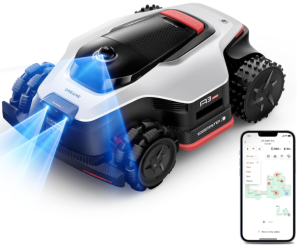
The DREAME A3 AWD 1000 LiDAR Robot Lawn Mower is designed for homeowners who want to maintain a beautiful lawn without spending their weekends pushing a mower. Combining all wheel drive traction, 360° LiDAR navigation, binocular AI vision, and intelligent mowing technology, this robotic lawn mower is built to handle challenging gardens with slopes, obstacles, and multiple lawn sections.
Its wire free setup eliminates the need for traditional boundary cables or an RTK base station, while smart app controls make it easier to schedule mowing and monitor lawn care remotely. With support for steep inclines, obstacle avoidance, precision edge cutting, and large lawn coverage, the DREAME A3 AWD 1000 is a compelling option to consider among the Best Robot Lawn Mowers of 2026.
One of the most important features of the DREAME A3 AWD 1000 is its all wheel drive system, powered by heavy duty hub motors. According to the manufacturer, the mower can handle slopes of up to 80%, equivalent to approximately 38.7 degrees, and climb obstacles up to 2.17 inches high. This capability makes it suitable for gardens with rolling hills, uneven ground, and areas where conventional robotic lawn mowers may struggle to maintain traction.
The all wheel drive design is particularly useful for homeowners with complex lawn layouts, including L shaped and U shaped gardens, wraparound lawns, and properties divided into several mowing zones. Improved traction can help the mower navigate challenging terrain while maintaining more consistent movement across the grass. However, actual performance on slopes will depend on ground conditions, grass moisture, and surface traction.
The DREAME A3 AWD 1000 uses 360° LiDAR and binocular AI vision to map and navigate the lawn without requiring boundary wires or an RTK station. Its OmniSense 3.0 navigation technology is designed to identify the surrounding environment, plan mowing routes, and maintain accurate positioning in areas with challenging layouts.
This wire free approach simplifies installation because homeowners do not need to bury perimeter cables around the garden. The manufacturer also states that the mower can maintain accurate navigation under tree cover and near tall walls, making it suitable for properties where satellite based navigation systems may experience difficulties.
For homeowners who want to automate lawn care with less setup and ongoing supervision, this navigation system offers considerable convenience. Nevertheless, buyers should remember that actual mapping accuracy can depend on garden conditions, visibility, and the arrangement of obstacles.
The DREAME A3 AWD 1000 is designed to recognize and avoid more than 300 types of objects using its AI vision system. These may include garden furniture, children’s toys, garden hoses, pets, and other common obstacles found around residential lawns.
Obstacle avoidance helps the mower navigate around objects without requiring users to clear every part of the garden before each mowing session. It can also reduce interruptions when unexpected objects appear in its path. This is particularly helpful for busy households where outdoor spaces are used frequently.
Although the mower incorporates intelligent detection technology, obstacle avoidance should not be treated as a guarantee of safety around children or animals. Small, partially hidden, or unusual objects may not always be detected reliably, so homeowners should keep the lawn clear and follow the manufacturer’s safety recommendations.
The DREAME A3 AWD 1000 features EdgeMaster 2.0 technology to improve cutting along lawn boundaries. The manufacturer states that it can mow to within 1.97 inches of an edge, helping create a cleaner appearance around paths, garden borders, and other lawn boundaries.
For users who want an even closer finish, an optional trimmer module is available separately. According to the supplied product information, this attachment can reduce the remaining edge gap to less than 1.18 inches. This can help minimize the amount of manual trimming required after the mower finishes its scheduled work.
The edge cutting system is especially useful for homeowners who value a neat, professionally maintained appearance. However, the final result will depend on the shape of the lawn, the type of border, and whether the optional trimmer module is purchased and compatible with the particular model.
The DREAME A3 AWD 1000 is advertised for lawns measuring approximately 0.25 to 0.50 acre, making it suitable for many residential properties with substantial outdoor spaces. Its intelligent navigation and planned cutting patterns are designed to cover the lawn efficiently while reducing unnecessary movement.
The mower also comes with a 5A power adapter, which the manufacturer claims can recharge the unit in approximately 45 minutes, around 22% faster than its stated industry comparison. Faster charging can help reduce downtime between mowing sessions and allow the mower to resume its work more quickly.
For homeowners who want to maintain larger lawns without dedicating an entire weekend to mowing, the combination of automated coverage and relatively quick charging is appealing. Actual completion time will depend on the lawn’s size, complexity, grass growth, battery condition, and the amount of charging required during operation.
The DREAME A3 AWD 1000 is designed to support quiet, scheduled lawn maintenance, allowing users to choose mowing times that fit their routines. Scheduling nighttime operation can help homeowners avoid mowing during hot afternoons and free up more time for family activities or relaxation.
Regular automated mowing can also help keep grass at a consistent height without requiring long, occasional mowing sessions. This approach is convenient for people with busy schedules who prefer to manage lawn care through an app rather than operate a traditional mower themselves.
The supplied product description emphasizes quiet operation but does not provide a specific decibel rating. Buyers who plan to run the mower overnight should check the manufacturer’s published noise specifications and consider local noise restrictions and nearby neighbors.
The DREAME A3 AWD 1000 works with the Dreamehome app, allowing users to manage mowing schedules and monitor the machine remotely. The smart controls are designed to make lawn maintenance more flexible, particularly for homeowners who want to establish recurring mowing routines without manually starting the mower each time.
The product information also highlights custom mowing patterns, including decorative designs such as hearts and squares. These options provide a way to personalize the appearance of the lawn while keeping routine maintenance automated. The ability to monitor and manage the mower remotely is particularly helpful for homeowners who travel or spend much of the day away from home.
Before purchasing, users should confirm app compatibility, available customization options, and any requirements for remote access.
The DREAME A3 AWD 1000 includes a built in 4G module and HDR camera for remote monitoring and theft protection. These features allow homeowners to check the mower’s surroundings and monitor its status through supported app functions.
Remote monitoring can be useful when the mower operates while the owner is away, particularly on larger properties where checking the machine manually would be inconvenient. The product also offers animal friendly modes, giving users additional control over how mowing sessions are managed around outdoor activity.
Theft protection and remote monitoring add another layer of convenience, but buyers should verify mobile network requirements, coverage, and whether 4G connectivity requires a subscription or additional service fees.
Pros
- All wheel drive provides traction for slopes of up to 80%, according to the manufacturer.
- Can climb obstacles up to 2.17 inches high.
- 360° LiDAR and binocular AI vision enable wire free navigation without an RTK station.
- OmniSense 3.0 navigation supports intelligent mapping and mowing route planning.
- AI obstacle avoidance is designed to recognize more than 300 types of objects.
- EdgeMaster 2.0 provides edge cutting within 1.97 inches of lawn boundaries.
- Optional trimmer module can reduce the edge gap to less than 1.18 inches.
- Advertised coverage of 0.25 to 0.50 acre suits many residential lawns.
- The manufacturer claims approximately 45 minute charging with the included 5A adapter.
- App based controls support convenient scheduling and remote management.
- Custom mowing patterns allow more personalized lawn designs.
- Built in 4G connectivity and an HDR camera support remote monitoring and theft protection.
- Suitable for complex lawn layouts, including multiple sections and sloping terrain.
Cons
- The optional trimmer module is sold separately, increasing the overall cost for users who want closer edge cutting.
The DREAME A3 AWD 1000 LiDAR Robot Lawn Mower combines all wheel drive traction, advanced navigation, AI obstacle avoidance, and smart app controls in a system designed to reduce the work involved in maintaining a lawn. Its advertised ability to handle 80% slopes, climb obstacles up to 2.17 inches high, and cover lawns measuring 0.25 to 0.50 acre makes it an appealing choice for homeowners with demanding outdoor spaces.
Features such as EdgeMaster 2.0, optional precision trimming, rapid charging, custom mowing patterns, and built in 4G monitoring add flexibility and convenience. Although the optional accessories, connectivity requirements, and actual performance under challenging conditions deserve consideration, the DREAME A3 AWD 1000 has several useful capabilities for modern lawn care.
3) ECOVACS Goat O1000 LiDAR PRO Robot Lawn Mower
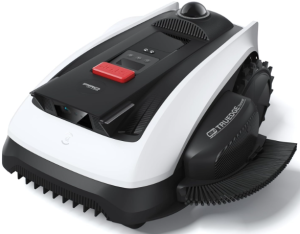
The ECOVACS GOAT O1000 LiDAR PRO Robot Lawn Mower is designed for homeowners who want a neatly maintained lawn without the hassle of traditional mowing. Combining wire free navigation, HoloScope 360° Dual LiDAR technology, AI powered obstacle detection, and built in edge trimming, this robotic mower aims to simplify lawn care while delivering precise cutting around garden boundaries.
It does not require perimeter wires or an RTK antenna, making installation more convenient for homeowners who prefer a smart, automated solution. Its slim body also allows it to navigate narrow paths as tight as 0.8 meters, making it particularly useful for compact gardens, side lawns, and properties with complicated layouts. These features make the ECOVACS GOAT O1000 LiDAR PRO a compelling option to consider among the Best Robot Lawn Mowers of 2026.
The ECOVACS GOAT O1000 LiDAR PRO uses HoloScope 360° Dual LiDAR technology to map the lawn and navigate without traditional boundary wires or an RTK antenna. According to the provided specifications, the system delivers positioning accuracy of approximately 2 cm, helping the mower maintain precise movement while planning its route around the garden.
This technology is particularly useful for lawns with trees, fences, and shaded areas where GPS dependent robotic mowers may experience positioning difficulties. By using LiDAR based navigation, the GOAT O1000 LiDAR PRO is designed to map the surrounding environment and maintain reliable guidance across different sections of the yard.
The wire free design also reduces installation effort because homeowners do not need to bury perimeter cables around the lawn. Although initial mapping and fine tuning may still be necessary, the system offers a convenient approach to automated lawn maintenance.
One of the useful features of the ECOVACS GOAT O1000 LiDAR PRO is its integrated TruEdge trimmer, which is designed to cut grass close to lawn boundaries. Unlike robotic mowers that leave a noticeable strip of uncut grass around the edges, this model aims to trim along driveways, sidewalks, flower beds, and irregular lawn borders as part of its mowing routine.
This integrated trimming system can reduce the amount of manual work required after each mowing session. Homeowners who want a tidy appearance around paths and landscaping may appreciate having a mower that handles both general grass cutting and edge maintenance.
However, the manufacturer notes that highly complex corners, narrow gaps, and raised edges may still require occasional manual trimming. The final results will depend on the shape and accessibility of the lawn boundaries.
The GOAT O1000 LiDAR PRO combines AI vision with 3D time of flight (ToF) LiDAR to identify and navigate around more than 200 types of obstacles, according to the supplied product information. These include children’s toys, patio furniture, pets, and small wildlife.
The system is designed to detect objects with precision down to 5 cm, helping the mower maintain clearance around obstacles while continuing its mowing route. This can be especially beneficial in family gardens where outdoor furniture, toys, and landscaping features are common.
By reducing unnecessary collisions and interruptions, the obstacle detection system can help protect garden features and improve the overall mowing experience. However, AI detection is not a guarantee that every object or animal will be recognized in all conditions. Homeowners should continue to supervise initial operation and keep the lawn clear of small or potentially hazardous objects.
The ECOVACS GOAT O1000 LiDAR PRO supports app based lawn management through the ECOVACS app. Users can create mowing zones, schedule mowing sessions, and configure no go areas for sections that should remain untouched.
This functionality allows homeowners to customize the mower’s operation according to their garden layout. For example, a front lawn can be assigned a different mowing schedule from a side lawn, while flower beds or delicate landscaping can be designated as restricted areas.
The ability to adjust mowing zones and schedules is particularly valuable for people who want to automate regular lawn care without manually operating the machine. Nevertheless, the initial setup may require some adjustments to ensure that the mapped areas and restricted zones match the actual garden layout.
The GOAT O1000 LiDAR PRO is designed with a super narrow body that can navigate passages as slim as 0.8 meters, or approximately 31.5 inches. This makes it a practical option for properties with tight lawn corridors, narrow side passages, and compact outdoor spaces that larger robotic mowers may struggle to access.
Its slim design can help the mower move between different lawn sections without requiring homeowners to redesign their garden layout. This is particularly useful for urban homes with limited outdoor space or properties where grass runs alongside fences, walls, and paved paths.
Combined with automated mapping and obstacle detection, the narrow body helps make the mower suitable for more complicated residential gardens. However, homeowners should measure their narrowest passages before purchasing and allow sufficient clearance for the mower to turn and maneuver.
The HoloScope 360° Dual LiDAR system is designed to maintain positioning accuracy even in shaded areas and locations near trees or fences. According to the supplied specifications, it provides positioning precision of approximately 2 cm, helping the mower follow planned routes and cover the lawn systematically.
This capability can be beneficial for gardens with mature trees, buildings, and other features that interfere with satellite signals. Rather than relying solely on GPS positioning, the mower uses LiDAR to understand its surroundings and navigate through mapped areas.
For homeowners with challenging garden layouts, this approach may help reduce navigation interruptions and improve mowing consistency. Actual performance will still depend on the environment, the layout of the lawn, and the quality of the initial mapping.
The combination of wire free mapping, automated mowing schedules, obstacle avoidance, and integrated edge trimming is intended to reduce the time homeowners spend maintaining their lawns.
Once the lawn has been mapped and the mowing zones configured, the mower can follow its planned routine with less direct intervention. The TruEdge trimming system is particularly useful because it aims to reduce the need for a separate string trimmer along accessible borders.
For busy homeowners, this can make regular lawn maintenance more convenient and help maintain a consistent appearance throughout the mowing season. However, occasional manual trimming, blade maintenance, and adjustments to mowing zones may still be necessary.
Pros
- Wire free navigation eliminates the need for perimeter wires and an RTK antenna.
- HoloScope 360° Dual LiDAR supports automatic mapping and precise navigation.
- Advertised positioning accuracy of approximately 2 cm helps maintain consistent mowing routes.
- Designed to navigate shaded areas and locations near trees and fences.
- Integrated TruEdge trimmer helps cut grass close to accessible lawn borders.
- AI vision and 3D ToF LiDAR are designed to identify more than 200 types of obstacles.
- Obstacle detection precision of approximately 5 cm helps the mower navigate around objects.
- ECOVACS app supports custom mowing zones, schedules, and no go areas.
- Slim body can navigate narrow passages as tight as 0.8 meters.
- Suitable for compact gardens, side lawns, and complex residential layouts.
- Automated mowing and edge trimming can reduce manual lawn maintenance.
Cons
- Initial mapping and app configuration may require adjustments for complicated gardens.
The ECOVACS GOAT O1000 LiDAR PRO is worth considering for homeowners who want a wire free robotic mower with precise navigation and integrated edge trimming. Its narrow body makes it particularly suitable for compact properties, side lawns, and gardens with tight passages that larger mowers may find difficult to
The ECOVACS GOAT O1000 LiDAR PRO Robot Lawn Mower offers a useful combination of wire free navigation, HoloScope 360° Dual LiDAR, AI obstacle detection, integrated TruEdge trimming, and smart app controls. Its advertised 2 cm positioning accuracy and ability to navigate passages as narrow as 0.8 meters make it particularly appealing for compact gardens and properties with complicated layouts.
The integrated edge trimmer is a valuable addition for homeowners who want cleaner lawn borders with less manual effort, while customizable mowing zones and no go areas provide flexibility for managing different sections of the garden. Although complex corners may still require occasional trimming, and some important specifications such as battery runtime and maximum lawn capacity need to be confirmed, the mower offers several practical advantages for automated lawn care.
4) L2500-NEO Robot Lawn Mower
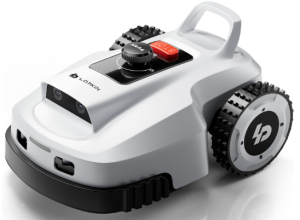
The L2500 NEO Robot Lawn Mower is designed for homeowners who want to maintain a large lawn without spending hours operating a traditional mower. Combining NetRTK positioning, AI vision, GNSS/INS fusion navigation, and long range Wi Fi HaLow connectivity, this robotic lawn mower offers a wire free approach to automated lawn care. It is designed to cover lawns up to 0.9 acre, navigate slopes of up to 57%, and avoid more than 300 common objects using AI vision.
Additional features, including smartphone app control, adjustable cutting height, an 8Ah battery, rain detection, and IP66 rated protection, make it a versatile option for different outdoor environments. For homeowners looking for a smart lawn care solution in 2026, the L2500 NEO deserves consideration among the Best Robot Lawn Mowers of the year.
The L2500 NEO uses a combination of NetRTK, AI vision, and GNSS/INS fusion navigation to achieve centimeter level positioning and intelligent mowing paths. This system is designed to guide the mower around the lawn without requiring traditional boundary wires. NetRTK is advertised as available without a subscription, which can help reduce ongoing operating costs.
The GNSS/INS fusion system combines satellite positioning with inertial navigation data to support continuous movement when signal conditions become challenging. This can be useful around trees, buildings, and other obstacles that may interfere with satellite reception. AI vision further helps the mower interpret its surroundings and navigate its environment.
For homeowners who want a simpler installation process, this wire free design is a significant convenience. However, positioning performance can still depend on environmental conditions, network availability, and the quality of the initial mapping.
The L2500 NEO is designed for properties with lawns measuring up to 0.9 acre, making it suitable for homeowners who need more coverage than many compact robotic mowers provide. Its intelligent navigation system is intended to plan efficient mowing routes and manage different lawn sections without requiring constant manual intervention.
According to the supplied specifications, the mower can cover up to 2,421 square feet per hour. This gives buyers a useful reference point when estimating mowing schedules, although actual productivity will depend on the lawn’s layout, grass density, terrain, and the time spent navigating obstacles or recharging.
For large residential gardens, the combination of automated mapping and substantial coverage capacity can make routine lawn maintenance more convenient. Buyers should still consider their property’s complexity and whether the mower’s working time is sufficient for their entire lawn.
The L2500 NEO is advertised as capable of handling maximum slopes of up to 57%, equivalent to approximately 30 degrees. For more consistent operation, the manufacturer specifies stable performance on gradients up to 40%, or approximately 22 degrees.
This slope capability makes the mower a potential choice for properties with rolling lawns, inclines, and uneven outdoor areas. Its navigation system is designed to maintain controlled movement while following planned mowing routes, helping homeowners automate lawn care in locations where flat terrain cannot be taken for granted.
Nevertheless, maximum slope ratings should not be treated as a guarantee of performance on every surface. Wet grass, loose soil, mud, and slippery inclines can reduce traction, so buyers should follow the manufacturer’s terrain recommendations.
The L2500 NEO includes a dedicated Wi Fi HaLow router with automatic pairing for a more convenient setup. Wi Fi HaLow is designed to provide longer range and better signal penetration than conventional Wi Fi in suitable conditions.
The manufacturer advertises connectivity coverage of up to 80,000 square meters, approximately 20 acres, in ideal open areas. This can be useful for homeowners with large gardens or properties where a conventional wireless signal may not reach every section of the lawn.
A stable connection helps support mapping, remote monitoring, and smartphone control. The dedicated router is intended to simplify the connection process, although actual coverage will vary depending on terrain, buildings, vegetation, and wireless interference.
The L2500 NEO can be controlled through the LOPKIN smartphone app, giving users access to mowing schedules, cutting modes, real time progress, and zone management. This makes it easier to manage lawn maintenance without operating the mower manually.
The app supports automatic mapping, manual drag to map, and app guided mapping. These options allow homeowners to choose a mapping method that suits their garden and create customized mowing zones for different sections of the property.
Users can also configure mowing paths and lawn patterns to personalize how the mower maintains the grass. Multi user sharing and multi device management provide additional flexibility for households where more than one person needs access to the lawn care system.
Although app control simplifies routine operation, users should allow time for initial mapping and fine tuning to ensure the mower follows the intended boundaries and avoids restricted areas.
The L2500 NEO uses AI vision technology to recognize and avoid more than 300 common objects, according to the supplied product information. These may include pets, children, toys, and garden furniture.
Instead of relying exclusively on physical collision detection, the system continuously analyzes its surroundings to identify objects and adjust its movement. This can help reduce unnecessary collisions and interruptions, particularly in busy gardens where objects may be left on the lawn.
Obstacle recognition is useful for homeowners who want a more automated mowing experience with less need to clear every area before operation. However, no AI vision system can guarantee that every object or animal will be detected under all conditions. Supervision during initial operation and appropriate precautions around children and pets remain important.
The L2500 NEO offers an adjustable cutting height ranging from 1.18 to 2.76 inches, equivalent to 3 to 7 cm. This allows users to adapt the mower’s settings to their preferred lawn appearance and the needs of different grass types.
Its 8Ah battery is advertised to provide up to 200 minutes of mowing per charge. When the battery needs replenishing, the included 5A fast charger is specified to deliver a full charge in approximately 180 minutes.
These specifications provide a useful balance between mowing time and charging time for regular residential lawn maintenance. However, actual runtime may vary with slope, grass thickness, cutting settings, and navigation demands. On a large or complicated lawn, the mower may need multiple sessions to finish the entire area.
The L2500 NEO features an IP66 rated housing designed to provide protection against dust and powerful water jets. This rating is useful for outdoor equipment exposed to changing weather and dusty garden conditions, although it does not mean the mower is suitable for immersion in water.
A built in rain sensor automatically pauses mowing when rain is detected. This helps the mower respond to wet conditions, which can make grass cutting less effective and increase the risk of slipping on slopes.
The mower also supports scheduled night mowing, allowing homeowners to organize lawn care around their daily routines. Customizable mowing paths, lawn patterns, and app based scheduling provide additional flexibility. Users should still follow the manufacturer’s recommendations for mowing in wet conditions and nighttime operation.
The L2500 NEO comes with a two year warranty for the mower and a separate one year warranty for the battery, according to the supplied product information.
Warranty coverage can provide reassurance when investing in robotic lawn care equipment, particularly when the mower includes several electronic components, sensors, navigation systems, and a rechargeable battery. Buyers should review the warranty terms to understand what is covered, any exclusions, and the process for requesting repairs or troubleshooting assistance.
It is also worth confirming the availability of replacement blades, battery replacements, and customer support in the buyer’s region before purchasing.
Pros
- Wire free navigation eliminates the need for traditional boundary cables.
- NetRTK, AI vision, and GNSS/INS fusion support precise positioning and intelligent navigation.
- NetRTK is advertised without a subscription requirement.
- Designed to cover lawns up to 0.9 acre.
- Advertised maximum slope capability of 57%, or approximately 30 degrees.
- Wi Fi HaLow router supports long range connectivity in suitable environments.
- LOPKIN app offers mowing schedules, cutting modes, mapping, and zone management.
- AI vision is designed to identify and avoid more than 300 types of common objects.
- Adjustable cutting height from 1.18 to 2.76 inches accommodates different lawn care preferences.
- 8Ah battery provides up to 200 minutes of mowing per charge.
- Included 5A charger provides a stated full charging time of approximately 180 minutes.
- IP66 rated protection helps protect against dust and powerful water jets.
- Rain sensor automatically pauses mowing when rain is detected.
- Supports night mowing, customizable paths, and lawn patterns.
- Two year mower warranty and separate one year battery warranty provide defined warranty coverage.
Cons
- Actual navigation accuracy may vary with satellite reception, network availability, and environmental conditions.
The L2500 NEO Robot Lawn Mower offers a feature rich approach to automated lawn care, combining wire free navigation, AI obstacle avoidance, long range connectivity, and substantial advertised lawn coverage. Its ability to manage up to 0.9 acre and handle slopes of up to 57% makes it an interesting option for homeowners with larger properties and uneven terrain.
The 8Ah battery, up to 200 minutes of mowing time, adjustable cutting height, and 5A charger support regular maintenance, while the LOPKIN app provides convenient scheduling and zone management. IP66 rated protection and automatic rain detection add practical features for outdoor operation.
5) MOVA LiDAX Ultra 1000 Robot Lawn Mower
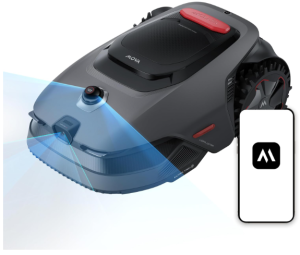
The MOVA LiDAX Ultra 1000 Robot Lawn Mower is designed for homeowners who want a well maintained lawn without the time and effort required for traditional mowing. Combining 360° 3D LiDAR navigation, AI assisted mapping, intelligent obstacle avoidance, and precision edge cutting, this robotic mower offers a convenient wire free approach to lawn care. It does not require perimeter wires or an RTK station, making setup simpler for gardens with complicated layouts.
The LiDAX Ultra 1000 also features rear wheel drive, off road wheels, U shaped mowing patterns, and automatic recharging with mowing resumption. With adjustable cutting heights, dual map management, and anti theft protection, it is a compelling option to consider among the Best Robot Lawn Mowers of 2026.
The MOVA LiDAX Ultra 1000 uses AI vision and 360° 3D LiDAR technology to map the lawn in three dimensions and navigate with centimeter level accuracy, according to the manufacturer. Unlike traditional robotic mowers that require boundary wires, this model is designed to operate without perimeter cables or an RTK positioning station.
Its automatic mapping system helps the mower understand the layout of the garden and plan mowing routes around different areas. The manufacturer also states that the navigation system can operate in complex layouts and under dim or harsh lighting conditions, providing greater flexibility for gardens with trees, buildings, and shaded sections.
This wire free design can reduce installation time and make it easier to configure the mower for different lawn layouts. Homeowners should still check the initial mapping and ensure the boundaries are correctly identified before allowing the mower to operate independently.
The MOVA LiDAX Ultra 1000 features UltraTrim 1.0 technology, which is designed to cut grass within 2 inches of walls, hedges, and raised edges. Its movable cutting disc helps reach areas that conventional robotic mowers may leave untrimmed, reducing the amount of manual finishing required after mowing.
For lawns with flush transitions between grass and pavement, the mower is designed to travel along the edge to produce a cleaner cut. This is particularly useful around driveways, garden paths, and other borders where homeowners want a neat, uniform appearance.
Although the edge cutting system helps minimize missed grass, results will depend on the shape of the lawn and the accessibility of its boundaries. Some narrow corners or difficult landscaping features may still require occasional manual trimming.
The LiDAX Ultra 1000 uses advanced AI vision and 3D point cloud data to recognize and avoid more than 300 types of lawn obstacles, according to the supplied specifications. These may include outdoor furniture, garden decorations, toys, and other common objects found around residential properties.
The obstacle avoidance system continuously analyzes its surroundings to help the mower adjust its route when objects are detected. This can reduce unnecessary collisions and interruptions while allowing the mower to navigate around landscaping features more efficiently.
The manufacturer also notes that algorithm updates are intended to improve recognition accuracy over time. This can be helpful as obstacle detection technology evolves, although the availability and frequency of updates may vary.
For households with children and pets, obstacle detection adds convenience, but it should not replace supervision or basic lawn preparation. Small, hidden, or unusual objects may not always be recognized reliably.
The MOVA LiDAX Ultra 1000 is equipped with rear wheel drive and off road wheels to improve traction on uneven ground. According to the manufacturer, it can handle slopes of up to 45%, navigate passages as narrow as 23.6 inches, and overcome obstacles up to 1.6 inches high.
These capabilities make the mower suitable for gardens with moderate inclines, uneven terrain, and narrow connecting paths. The traction focused design can help it maintain movement across areas where simpler robotic mowers may struggle.
Its ability to navigate challenging lawn layouts can be particularly useful for homeowners with multiple garden sections or landscaping features that complicate mowing routes. However, real world performance will depend on grass moisture, soil conditions, and surface grip. Wet or slippery slopes may reduce traction, so the manufacturer’s operating recommendations should be followed.
The LiDAX Ultra 1000 uses U shaped mowing path planning to cover the lawn in organized rows. This approach is intended to produce even cutting patterns while reducing unnecessary movement across the same areas.
Compared with random navigation patterns, systematic mowing can make it easier to achieve consistent coverage across a mapped lawn. The mower is designed to follow its planned routes while adapting to the layout of the garden.
When the battery runs low, it automatically returns to its charging station. Once recharged, it resumes mowing from where it stopped, helping reduce the need for users to restart a session manually.
This automatic charging and resumption feature is especially convenient for homeowners who want routine lawn maintenance to happen with minimal supervision.
The MOVA LiDAX Ultra 1000 supports two independent maps and management of up to 150 mowing zones. This allows users to organize lawn care across different areas, such as separate front and back yards or distinct sections of a larger property.
Through its zone management functionality, homeowners can establish tailored mowing plans according to the requirements of each area. For example, a frequently used lawn can have a different schedule from a less frequently used section of the garden.
The ability to manage two maps can also be useful for properties with separate lawn areas, potentially reducing the need to purchase another mower. However, buyers should confirm the practical requirements for transporting the mower between separate areas and ensure both maps are compatible with their intended setup.
The LiDAX Ultra 1000 provides an adjustable cutting height ranging from 1.2 inches to 3.9 inches. Users can change the setting through the MOVAhome app to suit their preferred lawn appearance and grass maintenance requirements.
This wide adjustment range offers flexibility for homeowners who prefer shorter, closely maintained grass or a longer lawn finish. Cutting height can also be adjusted according to seasonal growth and the condition of the grass.
App based adjustment makes it easier to change settings without repeatedly handling the mower. However, the ideal cutting height depends on the grass variety, weather, and lawn condition, so users should select a setting appropriate for their particular garden.
The MOVA LiDAX Ultra 1000 includes TrueGuard security features designed to monitor the mower and its surroundings. The system can detect potential risks and send alerts when necessary, providing an additional layer of protection when the mower is operating unattended.
With the compatible link module, the anti theft system supports real time tracking and immediate alerts if the mower is moved beyond its mapped area. These features can help owners respond more quickly to unexpected movement and monitor the mower remotely.
For homeowners who leave their robotic mower outdoors for extended periods, security monitoring is a useful consideration. However, buyers should verify whether the link module is included or sold separately and check any connectivity or service requirements associated with tracking features.
Pros
- Wire free operation eliminates the need for perimeter cables and an RTK station.
- 360° 3D LiDAR and AI vision support automatic mapping and precise navigation.
- Designed to maintain navigation performance under different lighting conditions.
- UltraTrim 1.0 aims to cut within 2 inches of lawn edges.
- Movable cutting disc helps reduce missed grass along accessible boundaries.
- AI vision is designed to identify and avoid more than 300 types of obstacles.
- Rear wheel drive and off road wheels support slopes up to 45%.
- Can navigate passages as narrow as 23.6 inches and overcome obstacles up to 1.6 inches high.
- U shaped mowing paths support systematic lawn coverage.
- Automatically returns to its charging station and resumes mowing after recharging.
- Supports two independent maps and management of up to 150 mowing zones.
- MOVAhome app allows cutting height adjustment from 1.2 to 3.9 inches.
- TrueGuard security provides monitoring and alerts for potential risks.
- Optional link module functionality supports real time tracking and alerts when the mower leaves its mapped area.
Cons
- Complex corners and difficult lawn boundaries may still require manual trimming.
The MOVA LiDAX Ultra 1000 Robot Lawn Mower combines 360° 3D LiDAR navigation, AI powered obstacle avoidance, UltraTrim 1.0 edge cutting, and systematic U shaped mowing in a wire free design. Its ability to manage two independent maps, support up to 150 mowing zones, navigate slopes up to 45%, and automatically resume mowing after charging makes it a versatile option for homeowners who want to simplify lawn care.
The adjustable cutting height and MOVAhome app provide useful control over lawn maintenance, while TrueGuard security adds remote monitoring and theft protection capabilities. Although the maximum lawn coverage, battery runtime, and charging time should be confirmed before purchase, its combination of navigation, edge cutting, and zone management offers several practical advantages.
6) Segway Navimow i210 AWD Robot Lawn Mower

The Segway Navimow i210 AWD Robot Lawn Mower is designed for homeowners who want to maintain a neat lawn with minimal manual effort, particularly on uneven ground and sloped terrain. Its all wheel drive system, electronic stability control, and zero turn steering help it navigate challenging areas while minimizing damage to the grass. The mower also eliminates the need for traditional boundary wires, using Network RTK positioning and vision technology to map and navigate the lawn.
With app based multi zone management, automatic recharging, and GPS security alerts, the Navimow i210 AWD offers a combination of automated lawn care, precise navigation, and convenient remote control. It is worth considering among the Best Robot Lawn Mowers 2026 for users who need a wire free mower with capable all terrain performance.
The Segway Navimow i210 AWD is built to handle challenging lawns with its all wheel drive system. Unlike a mower designed mainly for flat, open grass, this model is intended to maintain traction across uneven surfaces and sloping areas. It is rated to handle slopes of up to 45%, equivalent to approximately 24 degrees, making it a potential option for properties with noticeable gradients.
Automotive grade Electronic Stability Control helps stabilize the mower during operation, supporting smoother movement and more controlled mowing on demanding terrain. Actual performance can still depend on grass conditions, moisture, surface irregularities, and the layout of the lawn.
This robotic lawn mower uses a concentric third wheel design to perform zero turn maneuvers. The purpose of this design is to let the mower change direction within a small area without the aggressive pivoting that can scrape or tear grass. This is particularly useful when navigating around trees, garden beds, and other obstacles that require frequent turns.
The mower has a 7.1 inch cutting width and an adjustable cutting height ranging from 2 to 3.6 inches. These settings provide flexibility for maintaining grass at a preferred length, although the relatively narrow cutting width may mean more passes are needed across larger lawns.
One of the most convenient features of the Navimow i210 AWD is its wire free setup. Instead of requiring a traditional perimeter wire to be buried or secured around the lawn, it uses EFLS Network RTK positioning with vision technology to map and navigate the mowing area. Its one tap automatic mapping feature is designed to simplify initial setup, allowing users to establish a mowing map without manually defining every boundary.
Tri frequency Network RTK works alongside vision based navigation to deliver centimeter level positioning accuracy under suitable conditions. This can help the mower follow planned routes and maintain defined mowing areas with precision. However, positioning performance may vary depending on satellite reception, obstructions, and local network coverage.
The Navimow i210 AWD includes an on demand drive system that provides additional power when it is needed rather than operating at maximum power continuously. This adaptive approach is designed to balance traction and energy consumption as the mower moves across different parts of the lawn. It is powered by a 5.1Ah battery and is advertised to cover up to 2,690 square feet per charge.
This capacity may suit smaller lawns or defined mowing zones, but owners of larger properties should consider whether the mower can maintain their desired schedule within its available operating time. Actual coverage will depend on the terrain, grass density, route planning, and mowing conditions.
For gardens with separate grass areas, the Navimow i210 AWD supports management of up to 20 mowing zones. Users can organize different areas and set up mowing routes to suit the layout of their property. This can be useful for lawns separated by pathways, garden features, or narrow connecting sections, provided the mower can navigate between the relevant areas.
The system also supports automatic recharging and resumption, allowing the mower to return to its charging station when needed and continue its work afterward. This reduces the need for constant supervision and helps maintain a more consistent mowing routine.
The mower includes GPS based security features that send app notifications when it is lifted or moves outside designated areas. These alerts can help owners monitor the machine and respond if it is moved unexpectedly. App based controls also make it easier to manage mowing zones and schedules without operating the mower manually. As with other connected lawn care devices, the usefulness of remote monitoring depends on the availability of the required positioning and network services. GPS alerts can improve awareness, but they should not be treated as a guarantee against theft.
Pros
- All wheel drive design helps tackle uneven lawns and challenging terrain.
- Rated for slopes up to 45%, or approximately 24 degrees.
- Electronic Stability Control helps improve stability during mowing.
- Zero turn steering is designed to reduce grass scraping during tight turns.
- Wire free setup eliminates the need for traditional perimeter boundary wires.
- Network RTK and vision technology support precise lawn mapping and navigation.
- Adjustable cutting height from 2 to 3.6 inches accommodates different lawn preferences.
- Supports up to 20 mowing zones for flexible lawn management.
- Automatic recharging and mowing resumption reduce manual intervention.
- GPS security alerts notify users if the mower is lifted or leaves designated areas.
Cons
- The advertised coverage of 2,690 square feet per charge may be limiting for larger properties.
The Segway Navimow i210 AWD Robot Lawn Mower is a capable option to consider among the Best Robot Lawn Mowers 2026, especially for homeowners who need a wire free mower for uneven terrain and sloped gardens. Its all wheel drive system, Electronic Stability Control, and zero turn steering are designed to improve maneuverability while helping protect the lawn. Network RTK positioning and vision based mapping simplify setup, while support for up to 20 mowing zones, automatic recharging, and GPS security alerts make everyday lawn maintenance more convenient.
Its main consideration is the advertised coverage of up to 2,690 square feet per charge, which may be better suited to smaller lawns than extensive properties. The 7.1 inch cutting width and dependence on suitable positioning conditions are also worth considering. Overall, the Navimow i210 AWD is worth evaluating if traction, precise navigation, and reduced manual setup are priorities. Before buying, compare its coverage with your actual lawn size and confirm the battery, charging, connectivity, and weather protection specifications for your region.
Next read: 7 Best Gun Safe With Fingerprint Lock
Factors To Consider When Choosing The Best Robot Lawn Mowers 2026
1. Lawn Size and Battery Capacity
One of the first factors to consider when choosing a robot lawn mower is the size of your lawn and the mower’s coverage per charge. Different models are designed for different lawn areas, so it is important to select one that can maintain your grass without requiring excessive charging breaks. Check the battery capacity, estimated runtime, charging duration, and maximum recommended lawn coverage before making a decision.
For larger properties, consider a mower that can automatically return to its charging station and resume mowing where it stopped. Remember that thick grass, slopes, obstacles, and complex mowing routes can reduce the actual area covered per charge.
2. Navigation and Mapping Technology
Navigation technology determines how accurately a robot lawn mower can map your garden, follow mowing routes, and remain within designated boundaries. Some models use cameras and artificial intelligence, while others combine satellite positioning, Network RTK, LiDAR, or multiple navigation systems.
Wire free models can simplify installation because they do not require traditional perimeter wires, although their performance may depend on satellite reception, network coverage, lighting, and surrounding obstacles. Look for automatic mapping, reliable boundary recognition, and the ability to edit lawn maps through a mobile app. These features can make setup easier and help the mower maintain consistent coverage.
3. Terrain Handling and Slope Capability
If your lawn has hills, uneven ground, or rough patches, examine the mower’s ability to handle challenging terrain. All wheel drive systems, specialized wheels, electronic stability control, and suitable traction designs can help a mower maintain contact with the ground while navigating slopes. Manufacturers often specify a maximum gradient as a percentage or an angle, so check which measurement is being used when comparing models.
You should also consider how the mower performs on wet grass, loose soil, and uneven transitions between lawn sections. A mower with suitable terrain capability is less likely to struggle on difficult areas, although real world performance depends on the surface and weather conditions.
4. Cutting Width and Adjustable Cutting Height
Cutting width affects how much grass a mower can cut during each pass, while cutting height determines the length of grass left behind. A wider cutting deck may reduce the time required to maintain a large lawn, whereas a narrower mower may be easier to maneuver through smaller spaces.
Adjustable cutting height is useful if you prefer different grass lengths throughout the growing season or need to adapt to changes in weather. Check the available height range and make sure it suits your grass type and lawn maintenance preferences. Consistent cutting and appropriate height settings can help produce a tidy appearance without removing too much grass at once.
5. Obstacle Detection and Lawn Protection
A good robot lawn mower should be able to recognize obstacles and navigate around them safely. Depending on the model, obstacle detection may rely on cameras, artificial intelligence, LiDAR, or other sensors. These systems can help identify objects such as garden furniture, toys, trees, and other obstructions.
Consider whether the mower can navigate around narrow passages, flower beds, tree roots, and other features in your garden without repeatedly getting stuck. Zero turn steering or other grass friendly turning designs can also help reduce turf damage during tight maneuvers. However, obstacle detection is not infallible, so the lawn should still be cleared of loose objects before mowing.
6. Smart Features and Multi Zone Management
Smart controls can make robotic lawn care more convenient by allowing you to schedule mowing sessions, customize routes, define no go areas, and monitor progress through a mobile app. If your property has several separate lawn sections, choose a mower that supports multiple mowing zones and lets you adjust the schedule for each area.
Automatic recharging and resume functions are particularly useful because they allow the mower to continue working with less supervision. Some models also offer custom mowing patterns, remote monitoring, and multi user access. Before purchasing, check app compatibility, connectivity requirements, and whether any advanced features require a subscription or additional equipment.
7. Security and Weather Resistance
Since a robot lawn mower may operate outdoors and remain unattended for long periods, security and weather protection are important considerations. Features such as GPS tracking, lift detection, movement alerts, PIN protection, and app notifications can help owners monitor the mower if it is moved unexpectedly.
Check whether the mower supports location tracking and whether its connectivity services are available in your area. Weather related features are equally important. Rain sensors, suitable water resistance ratings, and automatic return functions can help protect the equipment during changing conditions. Confirm the manufacturer’s recommendations for mowing in rain, cleaning the mower, and storing or charging it safely.
8. Maintenance, Durability, and Overall Value
Before choosing a robot lawn mower, consider its long term maintenance requirements and overall cost of ownership. Check how easily you can replace the cutting blades, clean the wheels and sensors, obtain spare parts, and access warranty support. A durable design and readily available replacement components can make ownership more convenient over time.
Compare the purchase price with the lawn coverage, navigation features, battery performance, and level of automation offered. It is also worth checking the warranty terms for the mower and battery separately, along with the availability of local servicing. The best value is not necessarily the least expensive model, but one that suits your lawn, performs reliably, and keeps ongoing maintenance manageable.
Next read : 8 Best Fireproof Gun Safe For Home Use
Advantages Of Using A Robot Lawn Mowers In 2026
1. Saves Time and Reduces Manual Labor
One of the biggest advantages of using a robot lawn mower in 2026 is the time it saves on routine lawn maintenance. Instead of pushing a traditional mower around the garden, you can set a schedule and let the robotic mower handle much of the work automatically.
Many models can navigate the lawn, return to their charging stations when their batteries run low, and resume mowing without constant supervision. This makes it easier to maintain your lawn while focusing on work, family activities, or other gardening tasks.
2. Maintains a Consistently Neat Lawn
Robot lawn mowers are designed to cut grass regularly, often following programmed schedules throughout the week. Frequent mowing helps keep grass at a more consistent height and reduces the need for occasional, intensive cutting sessions.
Many models also allow you to adjust the cutting height to suit your preferred lawn appearance and seasonal conditions. With a suitable mowing schedule, you can maintain a tidy garden with less effort than traditional mowing methods typically require.
3. Handles Slopes and Uneven Terrain
Modern robotic lawn mowers offer improved options for gardens with hills, uneven surfaces, and challenging ground conditions. Depending on the model, features such as all wheel drive, specialized traction wheels, and electronic stability control can help the mower navigate slopes and maintain traction.
This is particularly useful for homeowners whose lawns are difficult to mow with conventional equipment. However, it is important to choose a model with a suitable slope rating and remember that wet grass, loose soil, and abrupt changes in elevation can affect performance.
4. Simplifies Installation with Wire Free Navigation
Many robot lawn mowers available in 2026 use advanced navigation systems that eliminate the need for traditional perimeter wires. Depending on the model, they may use satellite positioning, Network RTK, cameras, artificial intelligence, or LiDAR to map the lawn and follow designated boundaries. Automatic mapping can make setup quicker and allow users to adjust lawn layouts through a mobile application. This reduces the need to install physical boundary cables, although some systems may require good satellite reception, network coverage, or suitable conditions for accurate navigation.
5. Reduces Lawn Damage During Turning
Some robotic lawn mowers use specialized steering systems designed to make tight turns while minimizing damage to the grass. Zero turn designs, in particular, allow a mower to change direction within a small area without excessive pivoting or scraping. This can be beneficial when mowing around trees, flower beds, garden furniture, and other obstacles. Gentle turning can help preserve the appearance of the lawn, although results depend on the mower’s design, wheel traction, soil conditions, and how frequently it needs to turn in the same area.
6. Offers Convenient Smart Controls and Scheduling
Smart features make robotic lawn care easier to manage. Many models connect to a mobile application that lets users create mowing schedules, select cutting modes, define no go areas, and monitor the mower’s progress. Some support multiple mowing zones, which is useful for gardens with separate grass sections or different maintenance requirements.
Remote control and customizable settings also allow homeowners to adjust their mowing routines without physically operating the machine. These functions provide greater flexibility, though app features and connectivity requirements vary between models.
7. Improves Obstacle Awareness and Navigation
Modern robot lawn mowers may use cameras, artificial intelligence, LiDAR, and other sensors to detect obstacles and adjust their routes. These technologies can help the mower navigate around objects such as trees, garden furniture, toys, and other common obstructions. Improved obstacle recognition may reduce interruptions and make mowing more practical in gardens with complex layouts.
Some systems also recognize narrow passages and map individual lawn sections. Nevertheless, obstacle detection is not perfect, so removing loose objects from the lawn and supervising initial operation remain sensible precautions.
8. Can Reduce Noise and Disruption
Many robotic lawn mowers use electric motors and relatively compact cutting systems, which can make them quieter than many conventional petrol powered lawn mowers. Lower noise levels can make routine lawn maintenance less disruptive to household members and neighbors.
Depending on the model’s specifications and local rules, quieter operation may also provide greater flexibility when scheduling mowing sessions. Actual noise levels vary, so check the manufacturer’s decibel rating if quiet operation is a priority, and follow any local restrictions on operating times.
Best Robot Lawn Mowers 2026 FAQs
1. What should I look for when choosing the best robot lawn mower in 2026?
When choosing the best robot lawn mower in 2026, consider your lawn size, battery runtime, cutting width, adjustable cutting height, and ability to handle slopes or uneven terrain. Navigation technology is also important, especially if you prefer a wire free model with automatic mapping. Look for useful features such as obstacle detection, multi zone management, automatic recharging, app control, and security alerts. The best choice is one that matches your garden’s layout, mowing requirements, and budget.
2. Are robot lawn mowers suitable for sloped and uneven lawns?
Yes, many modern robot lawn mowers are designed to handle sloped and uneven lawns, but their capabilities vary by model. Features such as all wheel drive, specialized traction wheels, and electronic stability control can help improve grip and stability on challenging terrain.
Before purchasing, check the manufacturer’s maximum slope rating and consider whether your lawn has wet grass, loose soil, steep edges, or rough patches. Choosing a mower suited to your specific terrain can help improve mowing performance and reduce the risk of getting stuck.
3. Do robot lawn mowers require boundary wires, and are they worth buying?
Not all robot lawn mowers require boundary wires. Many newer models use technologies such as Network RTK, cameras, artificial intelligence, or LiDAR to map the lawn and establish virtual boundaries through an app. These wire free systems can simplify installation and make it easier to adjust mowing zones.
Robot lawn mowers can be worth buying if you want to reduce manual mowing and maintain a consistent lawn with less supervision. However, consider the mower’s coverage per charge, battery life, navigation requirements, maintenance costs, and compatibility with your garden before making a decision.
Conclusion
In conclusion, the Best Robot Lawn Mowers 2026 offer a convenient and efficient way to maintain a healthy, neatly trimmed lawn with less manual effort. With advanced features such as wire free navigation, AI powered obstacle detection, automatic mapping, smart app controls, multi zone management, and automatic recharging, these mowers make lawn care easier and more flexible than ever.
Models equipped with all wheel drive and enhanced stability systems can also handle sloped and uneven terrain, making robotic mowing suitable for a wider range of gardens. When choosing the right mower, I recommend considering your lawn size, battery capacity, cutting performance, navigation requirements, maintenance needs, and budget. By comparing these essential factors and understanding each model’s advantages and limitations, you can find a robot lawn mower that suits your property and helps keep your lawn looking neat throughout the mowing season.