7 Best Telescopes With A Digital Camera

Telescopes with a digital camera have completely changed the way I experience astronomy and astrophotography. These smart telescopes combine powerful optics with advanced imaging technology, making it easier than ever to observe the moon, planets, galaxies, and deep-sky objects while capturing stunning photos and videos in real time.

I love how many of these telescopes include automatic tracking, app control, live image viewing, and intelligent image processing that remove much of the complexity associated with traditional telescopes. Whether you are a beginner looking for an easy way to start stargazing or an experienced astronomy enthusiast searching for advanced imaging capabilities, there are excellent options available for every skill level.

In this guide, I’ll cover the key features that make these telescopes stand out, share some of the top picks worth considering, explain the most important factors to look for before buying, and answer some frequently asked questions to help you choose the best telescope with a digital camera for your needs.

Best Telescopes With A Digital Camera

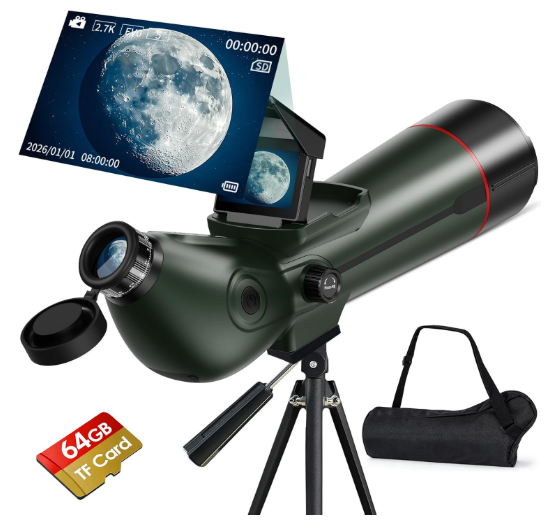
1) Fashionari Smart Telescope
  Fashionari Smart Telescope

The Fashionari Smart Telescope is an excellent choice for anyone searching for one of the best telescopes with a digital camera.

It combines advanced optics, digital imaging, and user-friendly controls into a versatile device that works well for astronomy, birdwatching, target shooting, and long-distance photography.

With its modern design and built-in recording capabilities, this telescope offers both convenience and impressive viewing quality for beginners and experienced users alike.

One of the most impressive aspects of the Fashionari Smart Telescope is its exceptional optical performance. It features an 80mm aperture paired with a 300mm focal length and an f/8.89 optical system, delivering bright and sharp images across a wide range of viewing conditions.

Whether observing the moon, distant landscapes, or wildlife, the telescope produces crisp detail with excellent brightness. The starlight-grade sensor supports magnification up to 350X, making distant objects appear much closer while maintaining strong image clarity.

The ability to capture 4K high-resolution photos also makes it highly appealing for users who enjoy astrophotography or nature photography.

The dual-screen viewing system adds another level of convenience and functionality. In addition to the traditional eyepiece, the telescope includes a foldable external display that allows direct real-time viewing without constantly looking through the eyepiece.

This feature creates a more comfortable observation experience, especially during extended sessions. The adjustable diopter correction range of +/-4 helps users fine-tune the image for better visual clarity, while the built-in sunshade improves screen visibility under bright daylight conditions.

Another strong advantage of the Fashionari Smart Telescope is its integrated photo and video recording capability. Users can instantly switch between photo and video modes with a single touch, allowing quick capture of memorable moments without requiring external devices or complicated setup processes.

Support for up to 512GB of external storage provides plenty of room for storing high-quality videos and images, making it practical for longer observation trips or photography sessions.

Battery performance is also very reliable. The built-in 4500mAh rechargeable battery offers up to six hours of continuous operation on a full charge, giving users enough power for nighttime stargazing or daytime outdoor exploration.

The customizable auto power-off function includes multiple timing options, helping conserve battery life when the telescope is not actively in use.

Its versatility makes the Fashionari Smart Telescope suitable for many outdoor activities beyond astronomy. It performs well for birdwatching, long-distance landscape viewing, and even target shooting observation. The included tripod improves stability for clearer viewing and steadier recordings.

Because of its combination of smart features and ease of use, it also makes a thoughtful gift for astronomy enthusiasts, outdoor adventurers, and photography lovers.

Pros

  • Excellent 80mm aperture for bright and detailed viewing
  • Captures sharp 4K photos and videos
  • Supports up to 350X magnification
  • Dual-screen system improves viewing comfort
  • Easy one-touch photo and video controls
  • Large storage support up to 512GB
  • Long-lasting 4500mAh battery
  • Adjustable diopter for personalized viewing
  • Works well for astronomy, birdwatching, and target shooting

Cons

  • Higher magnification may require extra stabilization in windy conditions

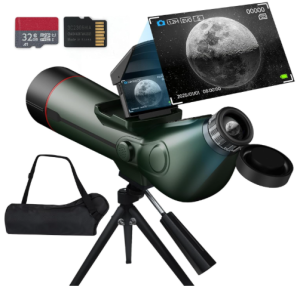
2) Yotomiguo Smart Telescope
  Yotomiguo Smart Telescope

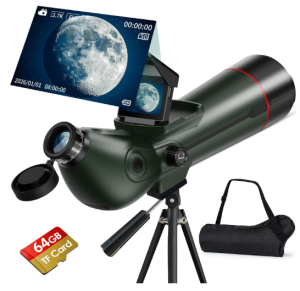
The Yotomiguo Smart Telescope is a strong option for anyone looking for one of the best telescopes with a digital camera. Designed for beginners, families, and casual astronomy enthusiasts, this telescope combines quality optics with smart digital features that make stargazing easier and more enjoyable.

Its ability to capture photos and videos without extra devices makes it especially appealing for users who want a modern telescope experience.

One of the biggest strengths of the Yotomiguo Smart Telescope is its dual-screen viewing system. The telescope includes a 3 inch foldable external display that allows users to observe celestial objects directly on the screen instead of constantly relying on the eyepiece.

This makes group viewing much more enjoyable since family and friends can watch together in real time. The built-in sunshade improves screen visibility during bright daytime conditions, creating a clearer and more comfortable viewing experience outdoors.

The optical performance is also very impressive for a beginner-friendly telescope. It features an 80mm aperture combined with a 300mm focal length and fully coated optical glass lenses with high transmission coatings. These coatings improve brightness and image clarity while helping reduce eye strain during long observation sessions.

Whether viewing the moon, planets, or distant landscapes, the telescope produces bright and detailed images that are enjoyable for both kids and adults.

The digital imaging capabilities make this telescope even more versatile. The starlight-grade sensor supports up to 350X magnification, allowing users to view distant objects with greater detail while also capturing 4K high-resolution images.

It performs surprisingly well even in low-light and moon-viewing conditions. The adjustable diopter compensation range of +/-6 also helps users achieve better focus according to their eyesight, improving overall viewing comfort.

Capturing photos and videos is very simple thanks to the one-touch control system. Users can instantly switch between photo and video modes without connecting external devices. The telescope supports external storage up to 512GB and already includes a 64GB memory card, giving users plenty of space to save their favorite celestial moments and outdoor observations right away.

The Yotomiguo Smart Telescope is also an excellent gift option for children and beginner astronomers. Its user-friendly design encourages curiosity about astronomy and nature while helping kids spend more time exploring the outdoors instead of focusing on screens.

The combination of educational value and digital convenience makes it a fun and practical telescope for learning and entertainment.

Pros

  •  Bright and clear 80mm optical system
  • Foldable 3 inch display supports group viewing
  • Captures 4K photos and videos
  • Supports up to 350X magnification
  • Fully coated optics improve image quality
  • Adjustable diopter provides comfortable viewing
  • Includes a 64GB memory card
  • Easy one-touch photo and video controls
  • Beginner-friendly design for kids and families

Cons

  • High magnification may require steady positioning for best clarity

3) Seestar S30 30mm Smart Astronomical Telescope
Seestar S30 30mm Smart Astronomical Telescope

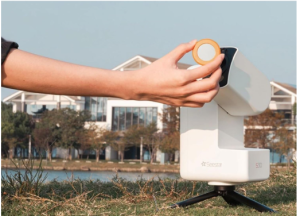
The Seestar S30 30mm Smart Astronomical Telescope is an excellent choice for anyone searching for one of the best telescopes with a digital camera. Built for convenience and simplicity, this smart telescope combines automated astrophotography features with a compact and portable design that makes stargazing far less intimidating for beginners.

It delivers a modern astronomy experience by allowing users to capture celestial images directly through a smartphone app without complicated manual adjustments.

One of the most appealing qualities of the Seestar S30 is its ability to capture high-resolution images with impressive clarity. The built-in image sensor produces detailed 1080×1920 images that work well for photographing deep sky objects, the moon, and even solar observations when using the included solar filter.

The telescope also includes both a tele lens for detailed celestial views and a wide-angle lens for broader sky scenes, giving users more flexibility when capturing different astronomical targets.

The setup process is remarkably simple and beginner-friendly. Users can get the telescope running in less than ten minutes by connecting it to the Seestar app, placing it under a clear night sky, and selecting an object from the built-in sky map.

Once an object is chosen, the telescope automatically aligns itself and begins capturing images without requiring complicated calibration or manual tracking. This ease of use makes it especially suitable for kids, casual stargazers, and anyone new to astrophotography.

The Seestar S30 also includes several intelligent imaging modes that simplify the photography process. Features such as auto alignment, image stacking, AI noise reduction, mosaic mode, video mode, and time lapse recording help users produce clearer and more detailed images with minimal effort.

These smart functions remove much of the technical learning curve often associated with astrophotography, allowing users to focus more on enjoying the night sky.

Portability is another major advantage of this telescope. Weighing only 3.6 pounds, the Seestar S30 is easy to carry for travel, camping, or backyard astronomy sessions. The included tripod, carry case, USB C cable, solar filter, and quick setup materials provide everything needed to get started right away.

Since the telescope is fully app controlled, it does require a smartphone or tablet for operation, which supports its clean and minimalist design.

The Seestar S30 is best suited for observing deep sky objects, the moon, and the sun rather than planets. While it may not provide detailed planetary views, its automated imaging system and smart features make it an outstanding option for beginners and social media enthusiasts who want to capture and share beautiful astronomical photos with ease.

Pros

  • Extremely easy setup process
  • Captures sharp high-resolution celestial images
  • Automatic alignment simplifies astrophotography
  • Intelligent imaging modes improve photo quality
  • Lightweight and highly portable design
  • Includes tripod, solar filter, and carry case
  • Smartphone app control is user-friendly
  • Great for deep sky and moon photography
  • Easy sharing to social media platforms

Cons

  • Not suitable for detailed planetary observation

4) ZWO Seestar S30 Pro Smart Telescope
ZWO Seestar S30 Pro Smart Telescope
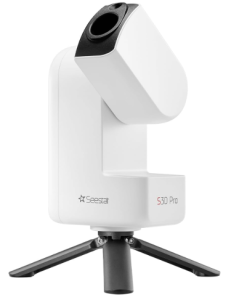
The ZWO Seestar S30 Pro Smart Telescope is an outstanding option for anyone looking for one of the best telescopes with a digital camera.

Combining advanced astrophotography technology with beginner-friendly automation, this smart telescope makes exploring the night sky easier and more enjoyable than traditional telescopes.

Its compact design, intelligent imaging system, and dual-camera setup make it ideal for both casual stargazers and photography enthusiasts who want impressive results with minimal effort.

One of the biggest advantages of the Seestar S30 Pro is its effortless setup and automated operation. Users simply power on the telescope, connect through the mobile app, and begin exploring the sky. The automatic GOTO targeting and tracking system quickly locates celestial objects and keeps them centered during observation and photography sessions.

This feature removes much of the complexity that often discourages beginners from trying astrophotography, making the telescope highly approachable for first-time users.

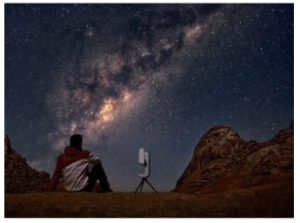
The dual-camera imaging system delivers impressive image quality for both astronomy and landscape photography. The telescope uses a powerful IMX585 telephoto sensor for detailed deep-sky photography along with a wide-angle IMX586 camera for capturing expansive night sky scenes.

Users can easily switch between close-up celestial images and wide Milky Way landscapes, creating more creative possibilities for astrophotography enthusiasts.

Another excellent feature is the one-tap intelligent imaging modes. The Seestar S30 Pro can photograph the Milky Way, star trails, galaxies, and planets using automated imaging settings that simplify the photography process.

The built-in mosaic stitching system combines multiple frames into breathtaking 8K ultra-wide images, helping users create professional-looking astrophotography results without advanced editing skills.

Optical quality is another area where this telescope performs exceptionally well. The precision 4-element apochromatic lens reduces chromatic aberration, resulting in sharper stars and stronger contrast across images.

Integrated filters reduce light pollution and infrared interference, helping reveal nebulae and deep-sky objects more clearly even in suburban environments with moderate city lighting.

The intelligent astrophotography assistant further improves image quality through automatic noise reduction and AI scene recognition. The system can separate the night sky from foreground landscapes, helping preserve sharp details in the Milky Way while maintaining natural-looking scenery below.

This creates more polished and visually balanced night sky photographs with very little manual adjustment required.

Versatility also makes the Seestar S30 Pro highly appealing. Beyond astronomy, it can function as a long-range digital camera for birdwatching, wildlife observation, and landscape photography during the day.

Features such as anti-dew protection, built-in 128GB storage, and scheduled imaging sessions make it reliable for extended nighttime use and outdoor photography adventures.

Pros

  • Beginner-friendly automated setup and tracking
  • Dual-camera system supports both telephoto and wide-angle imaging
  • Captures detailed 4K and ultra-wide 8K astrophotography images
  • Intelligent imaging modes simplify astrophotography
  • Excellent image clarity with apochromatic lens design
  • Built-in filters help reduce light pollution
  • AI noise reduction improves image quality
  • Includes 128GB internal storage
  • Useful for astronomy, birdwatching, and landscape photography
  • Anti-dew protection supports longer outdoor sessions

Cons

  •  Requires a smartphone app for operation

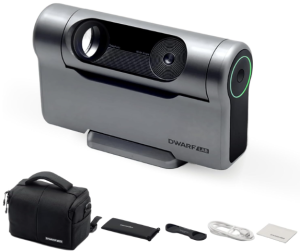
5) Dwarf 3 Smart Telescope

Dwarf 3 Smart Telescope

The Dwarf 3 Smart Telescope is an impressive choice for anyone searching for one of the best telescopes with a digital camera. Combining portability, smart automation, and advanced imaging technology, this telescope is designed for users who want a simple yet powerful astrophotography experience.

Its lightweight build and intelligent features make it suitable for beginners, travelers, outdoor enthusiasts, and experienced astronomy fans alike.

One of the most attractive qualities of the Dwarf 3 Smart Telescope is its ultra-light and portable design. Weighing only 3 pounds or 1.35 kilograms, it is one of the most travel-friendly smart telescopes available.

Its compact size allows it to fit easily inside a standard backpack, making it perfect for camping trips, outdoor adventures, and spontaneous stargazing sessions. Users can carry it comfortably without needing bulky astronomy equipment.

The dual imaging system gives the Dwarf 3 excellent versatility for both daytime and nighttime use. The telephoto lens is designed for capturing wildlife, landscapes, and deep-space objects with impressive detail, while the wide-angle lens is ideal for photographing the Milky Way, star trails, and broader night sky scenes.

During daytime observation, the wide-angle lens can help locate targets while the telephoto lens focuses on detailed subjects. This dual-camera setup creates a flexible imaging experience that works well across many environments.

Image quality is another area where the Dwarf 3 performs very well. The telescope features professional 4K auto-tracking technology that automatically follows celestial objects and moving subjects to maintain clear and stable images.

Whether photographing stars, planets, birds, or wildlife, the tracking system helps users capture smoother and sharper shots with less manual adjustment required.

The cloud-powered image processing system adds even more convenience. Through the dedicated DWARFLAB app, users can process and enhance photos with one-touch controls using cloud computing technology.

This removes the need for complicated astrophotography software or desktop editing programs. Images can quickly go from raw captures to polished final results in just minutes, making the entire experience far more accessible for beginners.

Ease of use is one of the strongest aspects of this smart telescope. The intuitive mobile app and automated functions allow users of nearly all ages to start astrophotography in as little as two minutes.

Its beginner-friendly interface removes much of the technical complexity traditionally associated with astronomy equipment, while still offering enough capability to satisfy more advanced users.

The included accessories also improve overall value. The package comes with a carrying bag, magnetic filters, filter pouch, cleaning cloth, and USB C cable, giving users most of the essential accessories needed to start exploring immediately.

Pros

  • Extremely lightweight and portable design
  • Fits easily into a backpack for travel
  • Dual-lens system supports both wide and telephoto imaging
  • Professional 4K auto-tracking improves image stability
  • Cloud-based image processing simplifies photo editing
  • Beginner-friendly setup and controls
  • Suitable for astronomy, wildlife, and landscape photography
  • Fast startup process with app connectivity
  • Includes useful accessories and carrying case

Cons

  • Requires smartphone app connectivity for full functionality

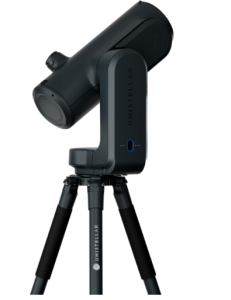
6) Odyssey PRO – UNISTELLAR Smart Telescope

Odyssey PRO - UNISTELLAR Smart Telescope

The Odyssey PRO Smart Telescope by UNISTELLAR is an exceptional choice for anyone searching for one of the best telescopes with a digital camera. Designed to combine premium optics with smart automation, this telescope delivers an immersive astronomy experience without the complexity of traditional telescope setups.

Its advanced imaging technology, integrated eyepiece system, and citizen science capabilities make it highly appealing for beginners, enthusiasts, and advanced astrophotographers alike.

One of the most impressive aspects of the Odyssey PRO is how quickly users can begin observing. The setup process takes less than two minutes. Users simply power on the telescope, connect to the mobile app, and begin exploring the night sky.

Automatic alignment, autofocus, motorized Alt-Az tracking, and ultra-precise GoTo functionality eliminate the need for polar alignment or complicated calibration procedures. Whether observing from a city balcony or a remote dark-sky location, the telescope makes stargazing remarkably accessible.

The exclusive eyepiece technology gives the Odyssey PRO a unique advantage over many other smart telescopes.

Unlike fully screen-based systems, this telescope allows users to enjoy an immersive visual observing experience directly through the eyepiece while still benefiting from advanced digital imaging enhancements.

Users can also observe and control the telescope through a smartphone or tablet, offering both traditional and modern viewing experiences in one system.

Its all-in-one integrated design further improves convenience and performance. The telescope includes 85mm f/3.9 optics, a built-in digital camera, electronics, motorized mount with GoTo technology, tripod, 64GB onboard storage, and a rechargeable battery capable of providing up to five hours of operation.

Despite its advanced capabilities, the telescope remains relatively compact with a 4 kg optical tube and a premium 2.5 kg tripod, making it portable enough for travel and outdoor astronomy sessions.

The imaging performance is highly impressive for astrophotography enthusiasts. The telescope provides access to a catalog containing more than 5,000 celestial objects along with a 37 million star database. Advanced users can export RAW and FITS image data for deeper editing and post-processing in astrophotography software.

The telescope also allows users to participate in real scientific research projects through NASA and SETI citizen science campaigns, including asteroid occultation observations and exoplanet transit tracking.

Optically, the Odyssey PRO delivers strong image quality with its 85mm mirror, 320mm focal length, and fast f/3.9 optical system. Its resolving power and limiting magnitude allow users to observe faint celestial objects with impressive clarity.

Wi Fi connectivity, compatibility with both iOS and Android devices, and one-click GoTo controls make navigation and operation simple even for less experienced users.

Pros

  • Extremely fast and beginner-friendly setup
  • Automatic alignment and autofocus simplify operation
  • Unique eyepiece viewing system offers immersive observation
  • Integrated digital camera captures detailed celestial images
  • Includes motorized GoTo mount and tripod
  • Compact and portable all-in-one design
  • Supports RAW and FITS image export
  • Large celestial object database for easy exploration
  • Allows participation in NASA and SETI citizen science projects
  • Up to 5 hours of battery life

Cons

  •  Premium smart features may come with a higher price point

7) Vaonis Vespera II

Vaonis Vespera II

The Vaonis Vespera II is an excellent choice for anyone looking for one of the best telescopes with a digital camera. Designed as a fully automated smart telescope, it combines portability, intelligent imaging technology, and user-friendly controls into a sleek and modern astronomy system.

Whether you are new to stargazing or an experienced astrophotography enthusiast, the Vespera II offers a smooth and highly enjoyable observing experience without the complicated setup associated with traditional telescopes.

One of the most appealing qualities of the Vespera II is its lightweight and portable design. Weighing only 11 pounds, this smart telescope is easy to transport for camping trips, outdoor adventures, or backyard astronomy sessions.

Its compact body allows users to experience the night sky from virtually anywhere without dealing with bulky equipment. The quick tripod setup with adjustable legs further simplifies preparation, allowing users to begin observing with just the press of a button.

The automation system is one of the telescope’s strongest features. The Vespera II uses advanced Star Field Recognition Technology to automatically activate and calibrate itself. This intelligent system identifies the stars above and aligns the telescope without requiring manual adjustments or technical knowledge.

Combined with the built-in GoTo tracking system, the telescope can automatically locate and track celestial objects while compensating for Earth’s rotation, creating a far more relaxed stargazing experience.

The optical and imaging performance is highly impressive for such a compact telescope. The Vespera II features a 50mm aperture and 250mm focal length paired with a fully coated optical system that delivers sharp and bright images.

Its 8.3MP camera can produce even higher quality images up to 32MP through Vaonis CovalENS technology, helping users capture detailed astrophotography results directly through the companion mobile app.

Another major advantage is its autofocus capability. The Vespera II is promoted as the only smart telescope in the world with autofocus specifically designed for astronomical objects. This allows users to achieve sharp focus automatically without constant manual corrections.

The live stacking feature within the app also allows stars and deep-sky objects to gradually appear in real time, creating a more immersive and visually rewarding observing experience.

The telescope is completely app controlled through the Vaonis mobile app, eliminating the need for traditional eyepieces. Users can explore the sky, adjust settings, and view captured images directly from their smartphone.

Its wide field of view also makes it suitable for capturing larger celestial scenes and deep-sky targets with ease.

Durability and convenience are also thoughtfully integrated into the design. The Vespera II is water resistant and can automatically shut itself off if rain is detected, helping protect the electronics during unexpected weather changes.

The rechargeable battery provides roughly four hours of operation, making it practical for most nighttime observing sessions.

Pros

  • Fully automated setup and calibration
  • Lightweight and highly portable design
  • Excellent app integration for smartphone control
  • Automatic GoTo tracking simplifies stargazing
  • Live stacking creates detailed real-time astronomy views
  • Auto-focus system improves image sharpness
  • Water-resistant construction adds outdoor reliability
  • High-resolution imaging with up to 32MP capability
  • Quick and beginner-friendly setup process
  • Compact design is easy to transport

Cons

  • Battery life may be limited for extended all-night sessions

Next read: 7 Best Spotting Scopes For Target Shooting

Factors To Consider When Choosing The Best Telescopes With A Digital Camera

When choosing the best telescope with a digital camera, several important factors can influence overall performance, ease of use, and image quality. Understanding these features can help you select a telescope that matches your astronomy goals, photography interests, and experience level.

1. Optical Quality

Optical quality is one of the most important factors to consider because it directly affects image clarity and brightness. A telescope with a larger aperture can gather more light, making celestial objects appear brighter and more detailed.

Fully coated lenses and advanced optical systems also help improve contrast while reducing glare and distortion. High-quality optics are especially important for viewing deep-sky objects, the moon, and distant landscapes clearly.

2. Camera Resolution and Imaging Performance

The built-in digital camera plays a major role in astrophotography quality. Higher camera resolution allows you to capture sharper and more detailed photos and videos of celestial objects. Features such as 4K imaging, intelligent image stacking, AI noise reduction, and mosaic stitching can significantly improve final image quality.

If astrophotography is a priority, choosing a telescope with advanced imaging technology can greatly enhance your experience.

3. Automatic Tracking and GoTo Technology

Automatic tracking systems make observing much easier, especially for beginners. GoTo technology allows the telescope to automatically locate and follow celestial objects as they move across the sky due to Earth’s rotation.

This eliminates constant manual adjustments and keeps targets centered during observation and photography sessions. Accurate tracking is particularly valuable for long exposure astrophotography and detailed night sky imaging.

4. Ease of Setup and User Friendliness

A telescope with a simple setup process can make astronomy far more enjoyable, especially for beginners. Many modern smart telescopes offer automatic alignment, app connectivity, and self-calibration systems that reduce the complexity of traditional telescope operation.

User-friendly controls and guided mobile apps help users begin observing quickly without requiring advanced astronomy knowledge.

5. Portability and Weight

Portability is important for users who plan to travel, camp, or observe from different locations. Lightweight and compact telescopes are easier to transport and store while still delivering strong performance.

Portable smart telescopes are especially useful for spontaneous stargazing trips and outdoor adventures where carrying large equipment may not be practical.

6. Smart Features and App Integration

Modern telescopes with digital cameras often include smart technology that improves convenience and functionality. Features such as smartphone app control, live image viewing, cloud image processing, real-time stacking, and automatic focusing can greatly simplify astrophotography.

App integration also allows users to explore star maps, control telescope movement, and instantly share captured images to social media platforms.

7. Battery Life and Storage Capacity

Battery performance is another important consideration, particularly for long nighttime observation sessions. A telescope with a longer battery life allows uninterrupted use during extended astrophotography or stargazing trips.

Built-in storage or expandable memory support is also useful for saving high-resolution photos and videos without constantly transferring files to other devices.

8. Intended Viewing Purpose

Different telescopes perform better for different types of observation. Some are designed primarily for deep-sky astrophotography, while others are more suitable for moon viewing, planetary observation, birdwatching, or landscape photography.

Before purchasing, it is important to determine whether your main interest is astrophotography, casual stargazing, wildlife observation, or a combination of multiple activities so you can choose a telescope that matches your needs.

Next read: 10 Best Tripod For Heavy Spotting Scope With Weight Attachments

Advantages Of Using Telescopes With A Digital Camera

1. Easy Astrophotography for Beginners

One of the biggest advantages of using telescopes with a digital camera is how much easier they make astrophotography for beginners. Traditional astrophotography often requires complicated camera attachments, manual tracking, and extensive technical knowledge.

Smart telescopes with built-in digital cameras simplify the entire process through automatic alignment, app control, and intelligent imaging features. This allows users to start capturing impressive celestial images with very little setup experience.

2. Ability to Capture and Save Images

Unlike traditional optical telescopes that only allow live viewing, telescopes with digital cameras let users capture photos and videos of celestial objects. This makes it possible to save memorable observations, build a personal astronomy collection, and revisit images later.

Users can photograph the moon, galaxies, star clusters, planets, and even daytime subjects such as wildlife and landscapes depending on the telescope’s capabilities.

3. Real-Time Viewing on Screens

Many digital telescopes support live viewing through built-in screens, smartphones, or tablets. This creates a more comfortable observation experience compared to constantly looking through a small eyepiece. Real-time display viewing is especially useful for families, classrooms, and group astronomy sessions because multiple people can observe the same object together at the same time.

4. Automatic Tracking and Object Finding

Digital telescopes often include automatic GoTo and tracking technology that can locate and follow celestial objects automatically. This removes much of the frustration associated with manually searching for stars, planets, and deep-sky targets.

Automatic tracking also keeps objects centered in the frame for clearer viewing and better long-exposure photography.

5. Improved Image Quality Through Smart Processing

Modern smart telescopes use advanced image processing technologies such as image stacking, AI noise reduction, and automatic enhancement. These features help improve brightness, sharpness, and contrast in celestial images, even in areas with some light pollution.

Many systems can automatically combine multiple exposures to reveal details that would be difficult to see with the naked eye alone.

6. Portability and Convenience

Many telescopes with digital cameras are designed to be lightweight, compact, and travel-friendly. Their portable design makes them easier to carry for camping trips, outdoor adventures, and remote stargazing locations.

Integrated cameras also reduce the need for bulky external photography equipment, making the entire setup simpler and more convenient.

7. Better Learning Experience

Digital telescopes can create a more engaging learning experience for beginners and younger users. Mobile apps, built-in sky maps, and automatic object recognition help users understand what they are viewing in the night sky.

This interactive approach makes astronomy more approachable and educational while encouraging curiosity about science and space exploration.

8. Easier Sharing and Social Connectivity

Captured photos and videos can easily be shared through social media, cloud storage, or mobile devices. Many smart telescopes are designed for instant sharing, allowing users to quickly upload astrophotography images without requiring complicated editing software.

This makes astronomy more social and enjoyable for hobbyists who like sharing their discoveries with friends and online communities.

9. Multi-Purpose Viewing Capabilities

Many telescopes with digital cameras are useful for more than just astronomy. Depending on the model, they can also be used for birdwatching, wildlife observation, landscape photography, and long-distance viewing during the daytime.

This versatility increases their value and allows users to enjoy the equipment in a wider range of situations.

10. Reduced Technical Complexity

Traditional telescopes can sometimes feel intimidating due to complicated alignment procedures, manual focusing, and tracking adjustments. Telescopes with built-in digital cameras simplify these tasks through automation and smart technology.

Features such as auto-focus, self-calibration, and app-guided controls allow users to spend more time enjoying the sky instead of troubleshooting equipment.

Best Telescopes With A Digital Camera FAQs

1. Are telescopes with a digital camera good for beginners?

Yes, telescopes with a digital camera are excellent for beginners because they simplify many of the difficult parts of traditional astronomy. Most smart telescopes include automatic alignment, object tracking, app control, and built-in imaging systems that make stargazing much easier.

Beginners can quickly locate celestial objects and capture photos without needing advanced astronomy knowledge or additional camera equipment.

2. Can a digital camera telescope capture planets and deep-sky objects?

Many telescopes with digital cameras can capture both planets and deep-sky objects, but performance depends on the telescope’s optics, sensor quality, and intended design. Some models are better suited for wide deep-sky photography such as galaxies and nebulae, while others perform better for detailed lunar and planetary viewing.

It is important to choose a telescope based on the type of astrophotography and observation you plan to do most often.

3. Do smart telescopes require a smartphone or tablet to work?

Most modern smart telescopes use a smartphone or tablet app for setup, controls, live viewing, and image capture. These apps help users align the telescope, select celestial objects, and manage photography settings more easily.

Some telescopes also include built-in displays or eyepieces, but mobile device integration remains one of the most common and convenient features in digital telescopes.

Conclusion 

In conclusion, the best telescopes with a digital camera offer an exciting combination of advanced optics, smart technology, and user-friendly features that make astronomy more accessible and enjoyable for everyone.

These telescopes are great because they allow users to observe and capture stunning images of the night sky with minimal setup and technical experience. Features such as automatic tracking, app control, live image viewing, intelligent image processing, and built-in digital cameras simplify astrophotography while delivering impressive results.

Many of these telescopes are also lightweight and portable, making them ideal for travel, backyard stargazing, wildlife observation, and outdoor adventures. Whether you are a beginner exploring astronomy for the first time or an experienced user looking for convenient astrophotography tools, telescopes with digital cameras provide a modern and highly rewarding way to experience the universe.